What Is an AML Crypto Wallet Check?
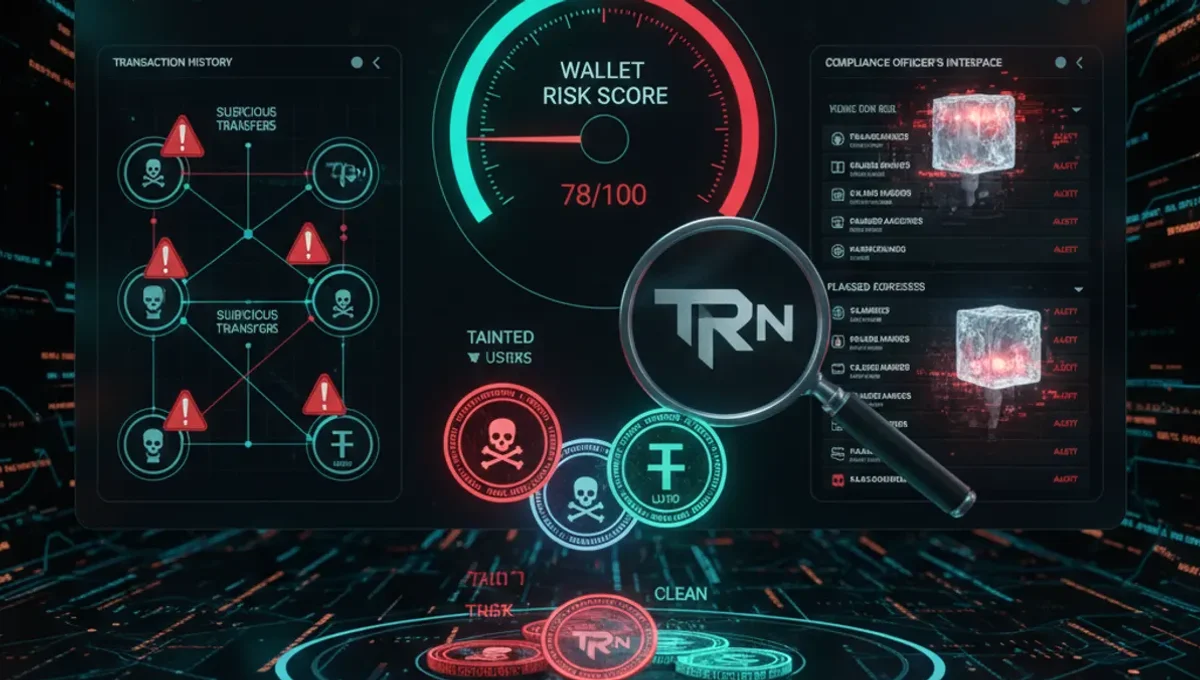
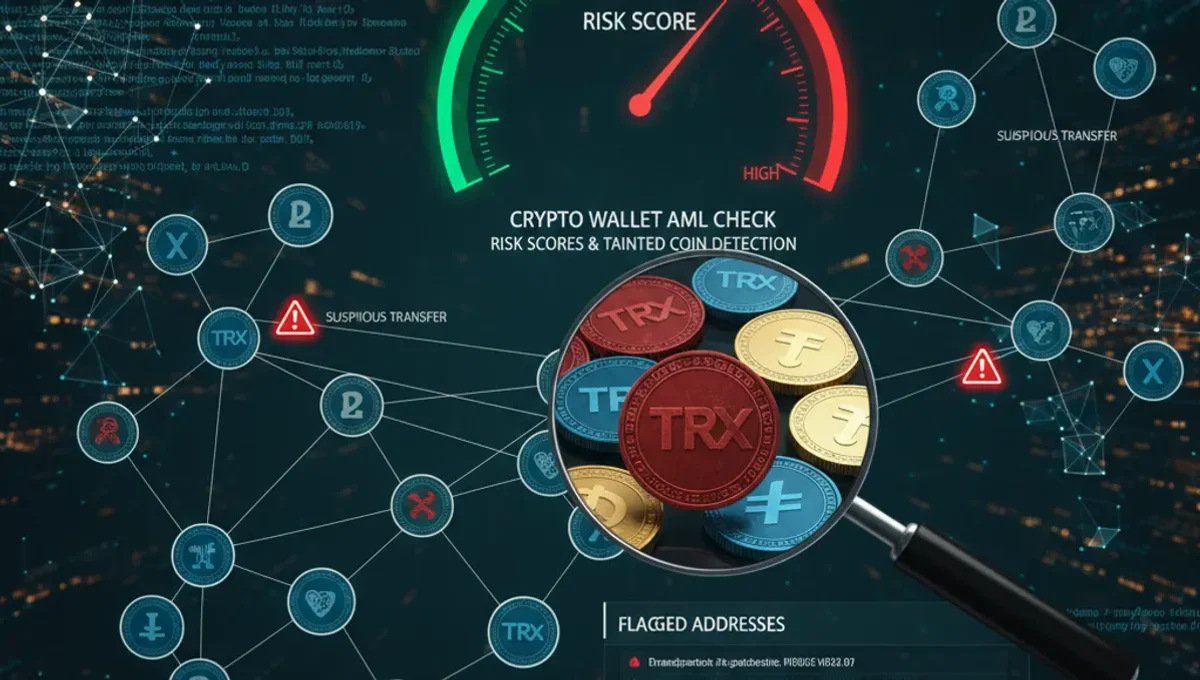
An AML crypto wallet check is a compliance scan that examines a blockchain address's transaction history and links to known illicit sources. AML stands for anti-money laundering. The check flags whether coins associated with that address have touched mixers, darknet marketplaces, ransomware wallets, sanctioned entities, or other high-risk activity.
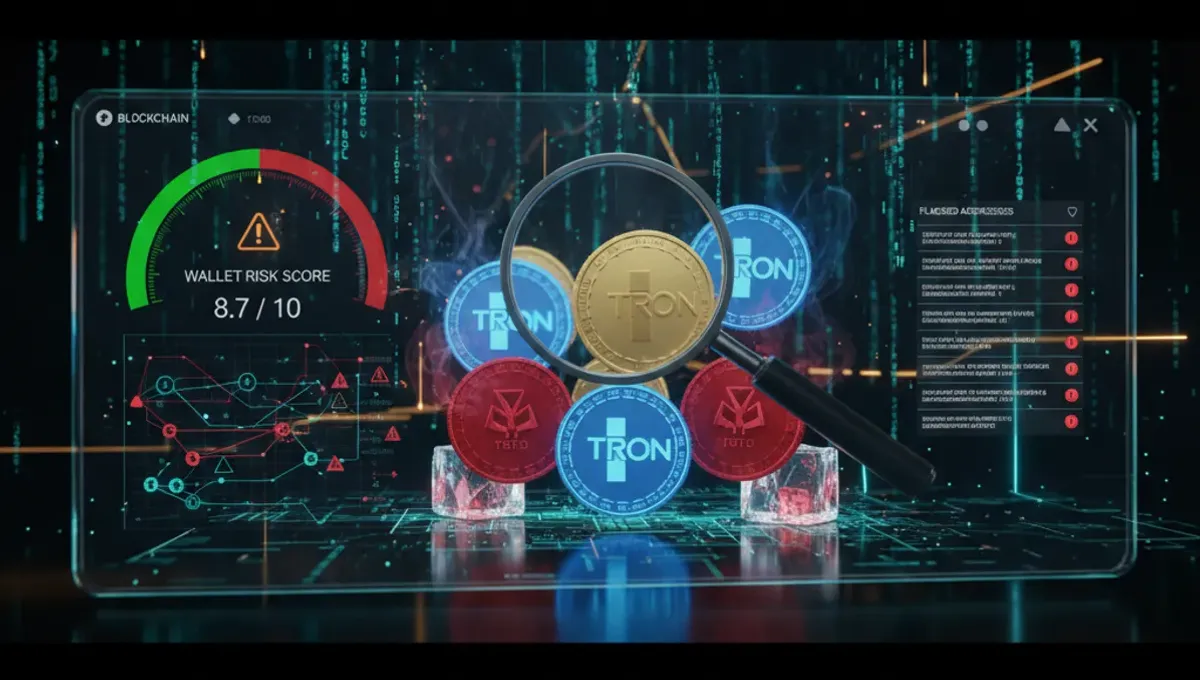
When you run an AML check on a crypto wallet, the service compares the address against blockchain analytics databases and sanctions lists. It assigns a risk score—typically ranging from low to critical—based on the strength of those links. A low-risk score means the address has clean transaction history. A high or critical score means the coins carry significant compliance risk.
This differs from a simple balance check. A wallet can hold legitimate funds but still carry risk if those funds originated from a compromised source. An AML crypto check free tool or paid service reveals that hidden risk before you accept payment or move coins to an exchange.
How Does AML Risk Scoring Work?
AML risk scoring assigns a numerical or categorical rating to a wallet based on its transaction footprint. Most services use a scale: low (0–20%), medium (21–50%), high (51–80%), or critical (81–100%). The score reflects the likelihood that coins are connected to illicit activity.
Risk factors include:
- Mixer exposure: Coins that passed through a coin mixer or tumbler raise flags because mixers obscure transaction trails.
- Darknet links: Addresses that received funds from known darknet marketplace wallets score high.
- Stolen funds: Coins traced to theft, hacks, or ransomware incidents carry critical risk.
- Sanctions: Addresses linked to sanctioned entities or countries trigger regulatory alerts.
- Gambling: Funds from high-volume gambling platforms may be flagged depending on jurisdiction.
- Scam reports: Addresses associated with Ponzi schemes, rug pulls, or fraud are marked.
The scoring engine weighs these factors and calculates a composite risk level. A single transaction to a mixer does not always mean critical risk; context and transaction volume matter. Professional AML check services use machine learning and manual review to refine scores, though free AML crypto check tools may use simpler heuristics.
How to Check a Wallet Before Receiving USDT or TRX
Before you accept USDT, TRX, or BTC from a counterparty, follow these steps to run an AML check:
- Obtain the wallet address: Ask the sender for the exact address from which they will send funds. Verify it matches their stated identity.
- Choose a screening service: Visit our curated list of verified AML services on the AML Services page to find a trusted provider. Options range from free basic checks to paid enterprise screening.
- Enter the address: Paste the wallet address into the service's search box. Specify the blockchain (Tron for TRX, Ethereum for USDT on ETH, Bitcoin for BTC).
- Review the risk score: The service returns a risk rating and a summary of flagged activity. Read the detailed report to understand why the score was assigned.
- Check transaction history: Look at the address's recent transactions. Do they align with the sender's story. Are there suspicious patterns or large transfers to mixers.
- Make a decision: If the risk score is low and the history is clean, proceed. If the score is high or critical, ask the sender for clarification or decline the transaction.
Many exchanges now perform this check automatically on deposits. Running your own check beforehand gives you control and prevents surprises.
What Risk Score Levels Mean for Your Coins
Understanding risk score categories helps you decide whether to accept or reject coins:
Low Risk (0–20%): The address has a clean transaction history with no known illicit links. Exchanges rarely flag these deposits. Safe to receive.
Medium Risk (21–50%): The address has some exposure to higher-risk activity—perhaps a transaction to a mixer or a link to a gambling platform—but no direct theft or sanctions. Most exchanges accept these, though they may trigger monitoring. Proceed with caution.
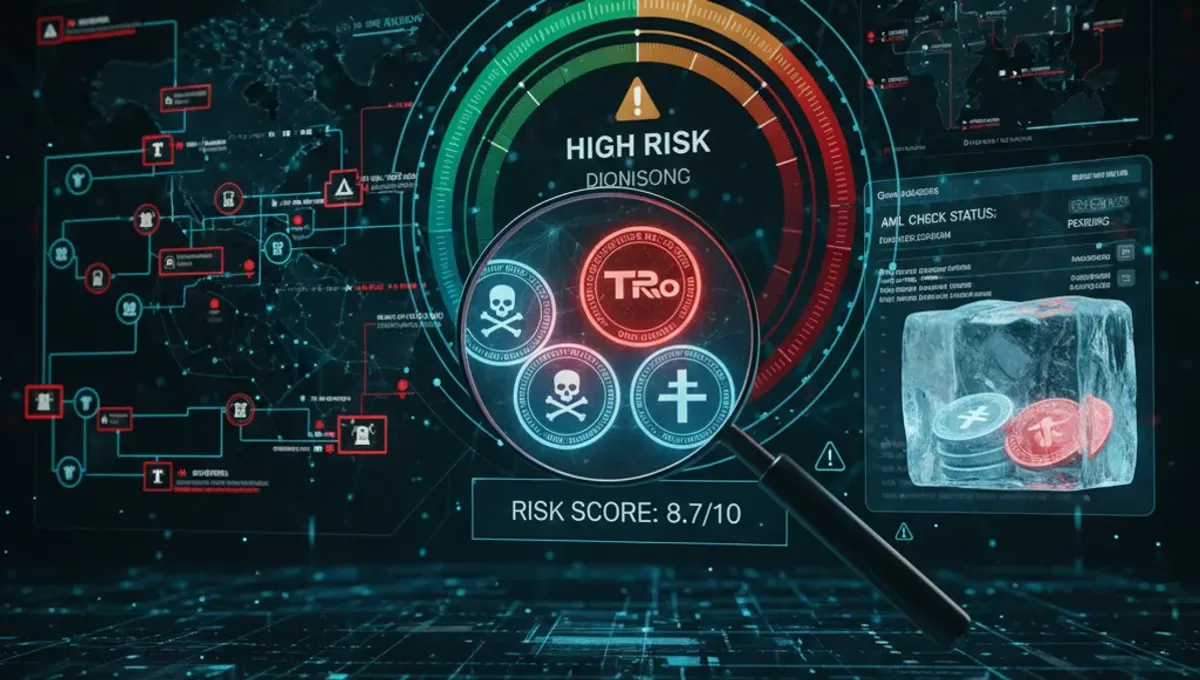
High Risk (51–80%): The address shows multiple red flags: mixer exposure, darknet links, or association with scams. Exchanges may hold the account for review or request additional documentation. Receiving these coins increases your compliance burden.
Critical Risk (81–100%): The address is directly linked to theft, ransomware, sanctioned entities, or active darknet markets. Exchanges will almost certainly freeze the account. Do not accept these coins unless you can prove legitimate recovery or legal authority.
Your exchange's risk tolerance varies. Some accept medium-risk coins; others reject anything above low. Check your exchange's policy and your local regulations. When in doubt, use a free AML crypto check to verify before committing.
What Happens If Your Coins Are Flagged as Dirty?
If you receive or hold coins flagged as tainted, several outcomes are possible:
Exchange account hold: When you deposit flagged coins, the exchange may freeze your account pending review. This can last days to weeks.
Withdrawal denial: The exchange may refuse to let you withdraw or trade the coins, even if your account is otherwise in good standing.
Account closure: Repeated deposits of high-risk coins can trigger permanent account termination.
Regulatory inquiry: In some jurisdictions, exchanges report suspicious activity to financial authorities. You may receive inquiries about the source of the coins.
Reputational risk: If you're a business or professional, holding flagged coins can damage trust with partners and customers.
Limited recovery options: Once coins are flagged, you cannot easily "clean" them. Moving them to another wallet does not remove the flag; blockchain analytics track the coins, not the wallet.
If your coins are flagged, contact the exchange's compliance team. Provide documentation of the legitimate source (e.g., a receipt from a purchase, a contract, or a legal judgment). Some exchanges will lift holds if you prove the coins were obtained legally. However, if the coins are linked to theft or sanctions, recovery is unlikely.
Free vs. Paid AML Crypto Check Services
Free AML crypto check tools offer basic screening; paid services provide depth and speed.
Free options typically allow you to scan one or a few addresses per day. They return a risk score and a brief summary of flagged activity. Free tools are useful for quick due diligence before receiving a single payment. Limitations include slower updates, fewer data sources, and no detailed transaction history.
Paid services offer unlimited checks, real-time data, detailed reports, API access for businesses, and priority support. Enterprise plans include transaction monitoring, batch screening, and compliance documentation. Paid services integrate with exchanges and payment processors for automated screening.
For most individuals, a free AML crypto check is sufficient. For businesses handling multiple transactions, a paid subscription to a verified service is worth the cost. Our AML Services page lists trusted providers offering both free trials and paid tiers. Start with a free check to assess the service, then upgrade if you need ongoing screening. Avoid unverified or unknown tools; they may not have current blockchain data or may mishandle sensitive information.
Acceptable Risk Score Thresholds and Best Practices
What risk score is acceptable depends on your use case and risk tolerance:
For personal use: Accept only low-risk coins (0–20%). If you're receiving payment for goods or services, the sender should provide a clean address. If they cannot, the transaction may not be legitimate.
For business: Set a policy. Many businesses accept low and medium-risk coins (0–50%) but require documentation for medium-risk deposits. Critical-risk coins should always be rejected.
For trading: If you're buying crypto on an exchange, the exchange has already screened the coins. However, if you're receiving coins peer-to-peer, run an AML check first.
Best practices:
- Always run an AML crypto check before accepting large transfers.
- Use a verified service from our AML Services page rather than unknown tools.
- Document your checks for compliance records.
- If a counterparty refuses to provide their address for screening, treat that as a red flag.
- Educate yourself on your exchange's policies; they may reject coins you accept.
- For recurring transactions, set up automated screening through a paid service.
- Never assume old coins are clean; blockchain history is permanent, and risk scores update as new data emerges.
Taking these steps protects your account, your reputation, and your legal standing.
Frequently asked questions
Is there a free AML crypto check tool?
Yes. Several services offer free AML crypto checks with basic risk scoring and flagged activity summaries. Free tools typically allow a few scans per day. For unlimited checks and detailed reports, paid services are available. Our AML Services page lists verified providers offering both free and paid options. Start with a free check to evaluate the service.
Can I check a TRX or USDT address for AML risk?
Yes. Most AML services support TRX (Tron) and USDT addresses on multiple blockchains—Tron, Ethereum, and others. When you run a check, specify the blockchain. The service scans the address's transaction history for illicit links, mixers, darknet exposure, and sanctions. Results are returned in seconds.
What does a high AML risk score mean for my exchange account?
A high risk score (51–80%) or critical score (81–100%) signals that the address has exposure to illicit activity. If you deposit coins from a high-risk address, the exchange may freeze your account, request documentation, or deny withdrawal. Critical-risk coins linked to theft or sanctions often trigger permanent account closure.
How often do AML risk scores update?
Risk scores update as new blockchain data is analyzed and new illicit activity is discovered. Most services update daily or in real-time. An address that was low-risk yesterday may become high-risk if it receives funds from a newly identified darknet wallet. Always run a fresh check before accepting large transfers.
What should I do if someone sends me coins from a high-risk wallet?
Contact the sender and ask for clarification or a resend from a clean address. If you've already received the coins, do not deposit them to an exchange immediately. Run an AML check first. If the score is critical, consider rejecting the payment or requesting a refund. If medium-risk, contact your exchange's compliance team before depositing.