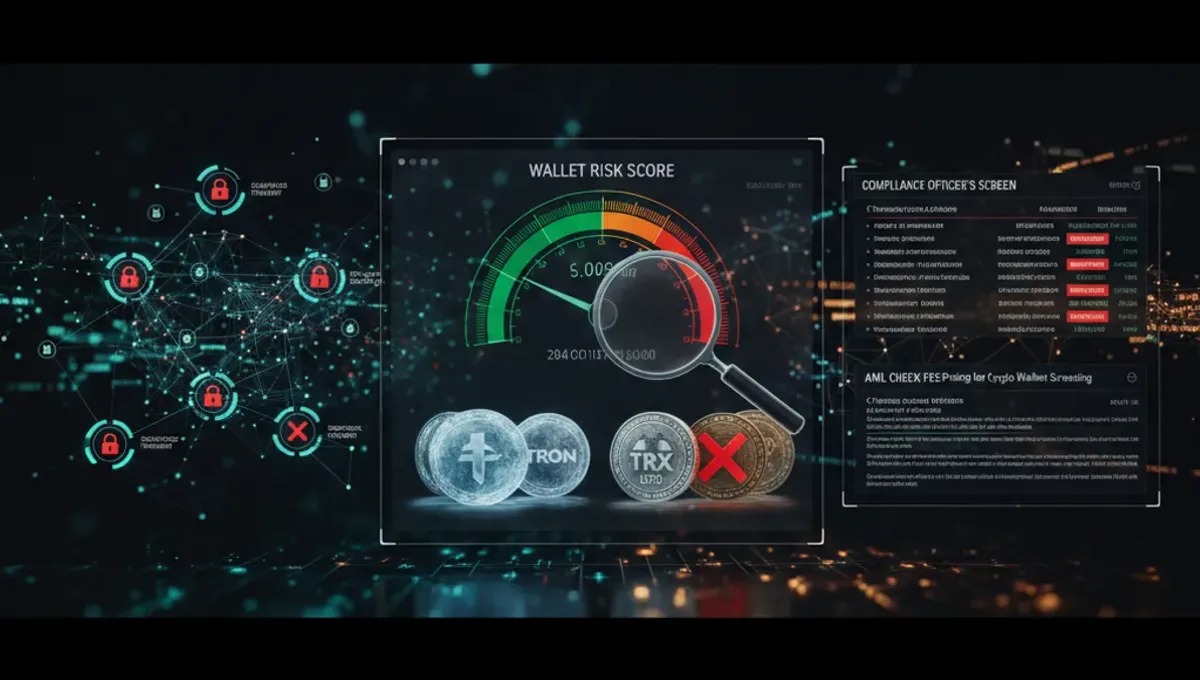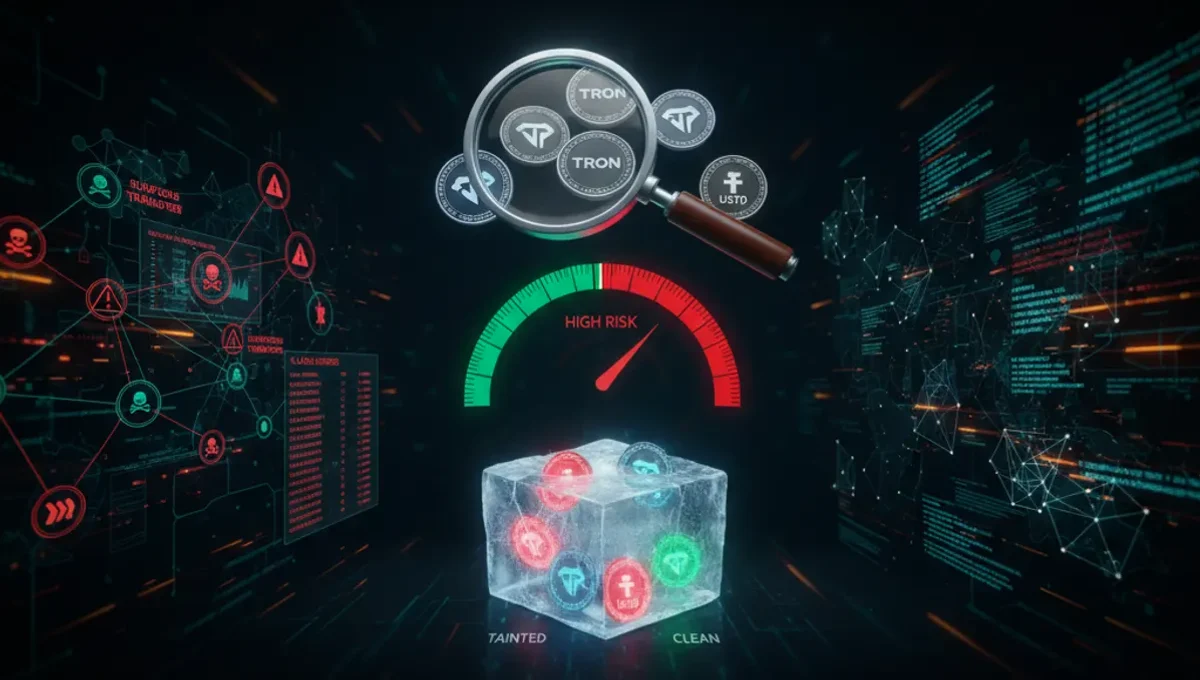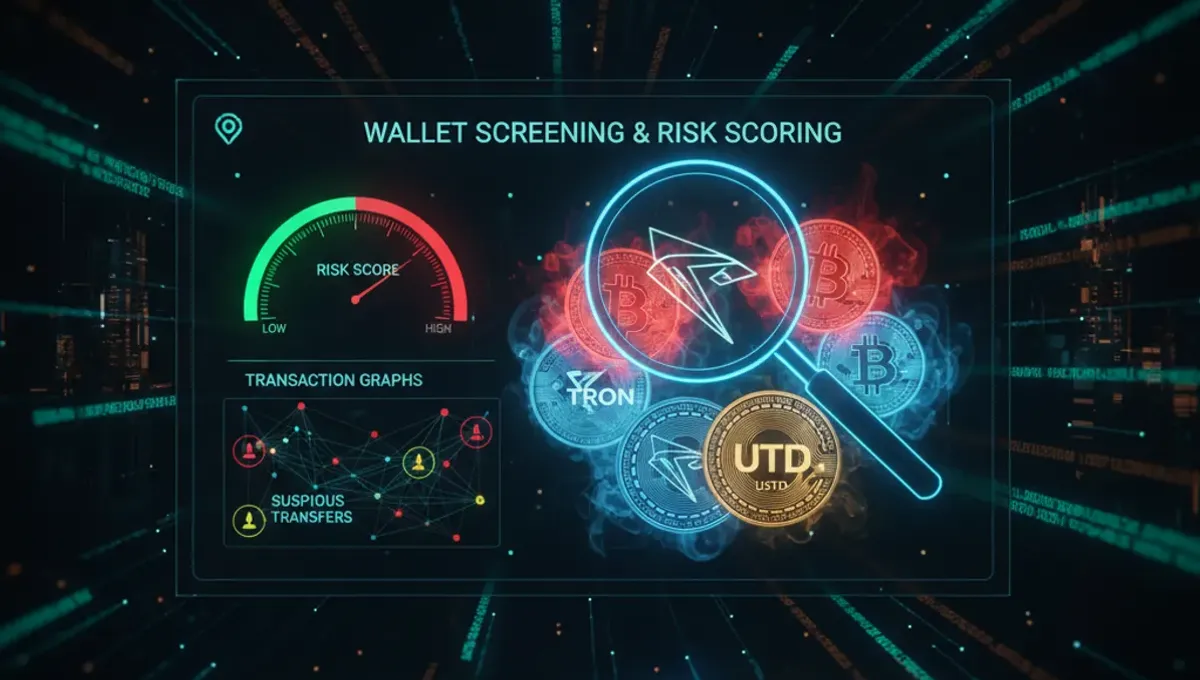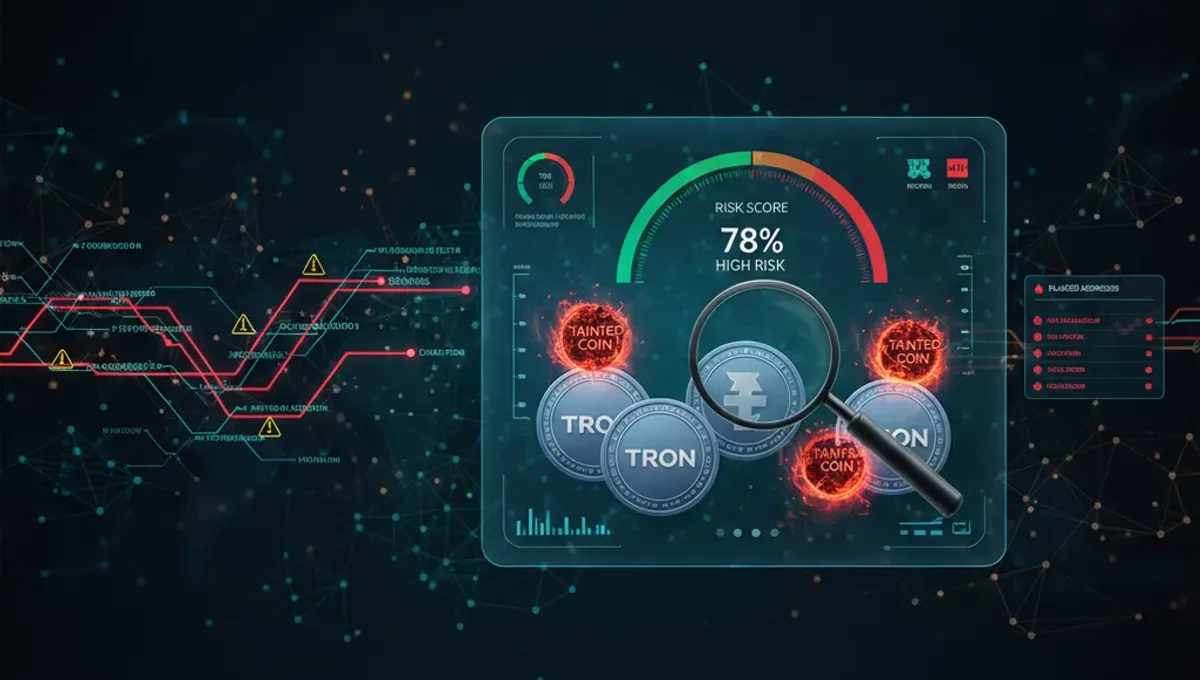
What Is an AML Check and Why Does It Matter for Crypto Wallets
AML stands for Anti-Money Laundering. An AML check on a crypto wallet examines the transaction history and source of funds associated with that address. It identifies whether coins have moved through high-risk channels: mixers, darknet markets, scam operations, stolen funds, or sanctioned entities.
Why it matters: If you receive tainted cryptocurrency, exchanges may freeze your account or lock your USDT. Regulators increasingly require businesses to perform wallet screening before accepting payments. A single transaction from a flagged address can trigger compliance red flags, even if you were unaware of the coin's history.
AML checks apply to all major blockchains. Whether you're receiving TRX on Tron, USDT on Ethereum or Tron, or BTC on Bitcoin, the same principle applies: verify the wallet's risk profile before the transfer settles.
How Does AML Risk Scoring Work for Crypto Addresses
AML risk scores rank wallet addresses on a scale, typically 0–100 or Low/Medium/High/Critical. The score reflects the likelihood that an address has received or sent illicit funds.
Factors that raise a risk score include:
- Direct receipt from a known mixer or tumbler service
- Transactions linked to darknet marketplace wallets
- Funds originating from a scam or theft incident
- Movement through sanctioned entity addresses
- Gambling platform deposits or withdrawals
- Rapid fund consolidation or splitting patterns
- Age and activity history of the address
A low risk score (typically 0–20) suggests the wallet has clean transaction history. Medium risk (20–50) indicates some exposure but not necessarily illicit activity. High risk (50–80) or Critical (80+) means the address has direct or strong indirect links to flagged sources.
Risk scores are not binary judgments; they reflect probability. A medium-risk address may still be legitimate, but it warrants additional due diligence before accepting large transfers.
Step-by-Step AML Check Process for TRX, USDT, and BTC Wallets
Follow these steps to perform an AML check on a crypto wallet:
1. Obtain the wallet address: Copy the full address from the sender or payment request. Ensure it matches the blockchain (TRC20 for Tron, ERC20 for Ethereum, native for Bitcoin).
2. Choose a verified AML service: Use a trusted blockchain analytics platform. Our curated list of verified AML services on this site includes tools specifically designed for wallet screening and risk assessment.
3. Enter the address: Paste the wallet address into the AML check tool.
4. Review the risk score and report: The service returns a risk score, transaction history summary, and flagged risk categories (if any).
5. Assess the findings: A low score generally means proceed. A medium score requires judgment based on transaction size and business context. A high or critical score warrants rejection or further investigation.
6. Document the check: Keep records of the AML check result for compliance and audit purposes.
The entire process typically takes seconds to minutes, depending on the service and address history complexity.
What AML Check Requirements and Fees Apply
AML check requirements vary by jurisdiction and business type. Regulated exchanges and payment processors are legally required to perform AML checks on customer wallets. Unregulated users are not legally mandated, but performing checks reduces personal risk.
AML check fees depend on the service model:
- Free tier: Many services offer a limited number of free checks per month or basic risk scoring without detailed reports.
- Per-check pricing: Typically $0.50–$5 per address, depending on report depth.
- Subscription plans: Monthly or annual plans for businesses performing frequent checks, ranging from $50–$500+ per month.
- Enterprise pricing: Custom rates for high-volume compliance teams.
Requirements for using an AML check service usually include:
- Valid email address or account registration
- Acceptance of terms of service
- No restrictions on checking addresses (most services allow screening any public blockchain address)
Some jurisdictions require businesses to retain AML check records for 5–7 years. Check local regulations for your specific compliance obligations.
Understanding AML Check Results: What Risk Levels Mean for Your Wallet
Interpreting AML check results correctly is essential for making safe decisions.
Low Risk (0–20): The address has clean transaction history with no flagged sources. Safe to receive funds from this wallet in most cases.
Medium Risk (20–50): The address has some exposure to higher-risk activity or intermediaries, but no direct link to known illicit sources. Acceptable for smaller transactions; use judgment for large transfers. Consider requesting additional verification from the sender.
High Risk (50–80): The address has direct or strong indirect links to mixers, darknet activity, or other flagged sources. Proceed with caution. Verify the sender's legitimacy independently. Receiving large amounts may trigger exchange alerts.
Critical Risk (80+): The address is linked to known scams, theft, sanctions, or active darknet operations. Reject transfers from this wallet. Receiving funds may result in account freezes or regulatory investigation.
Context matters: A medium-risk score from a trusted business partner may be acceptable. A high-risk score from an unknown sender is a red flag. Always weigh the risk score against the transaction amount and your compliance requirements.
What to Do If Your Crypto Wallet Is Flagged as Tainted or High-Risk
If your wallet receives a high AML risk score, take these steps:
1. Investigate the source: Review your transaction history. Did you receive funds from a mixer, gambling platform, or other high-risk source without realizing it. Trace the coins back to their origin if possible.
2. Do not move the coins immediately: Rapid transfers after a flagged deposit can increase suspicion. Document your findings first.
3. Contact the sender: Ask where the funds originated. If the sender claims ignorance or provides an implausible explanation, the coins may genuinely be tainted.
4. Consider the amount: Small amounts may not trigger exchange action. Large flagged deposits are more likely to cause account freezes or bans.
5. Report to your exchange: If you've already deposited flagged coins, notify your exchange's compliance team. Transparency often results in better outcomes than silence.
6. Use a verified AML service for clarity: Run a detailed AML check through a trusted provider to understand exactly which risk factors apply. Our verified AML services list includes tools that provide detailed risk breakdowns.
7. Consult a compliance expert if needed: For large amounts or complex situations, professional advice may be warranted.
Prevention is easier than remediation: always check wallets before accepting transfers.
How to Avoid Receiving Tainted Coins: Best Practices for Wallet Safety
Protect yourself by establishing a wallet screening routine:
1. Check every new sender: Before accepting a transfer, run an AML check on the sender's wallet address. Make this a standard practice, not an exception.
2. Set a risk threshold: Decide in advance what risk score level you will accept. For business transactions, keep the threshold low (under 20). For personal transfers from trusted contacts, you may accept medium risk (under 40).
3. Request wallet verification: Ask senders to provide their wallet address in advance. Verify it matches the address from which funds arrive.
4. Use reputable exchanges and platforms: Receiving coins through regulated exchanges reduces the likelihood of tainted funds, though it does not eliminate risk entirely.
5. Monitor your wallet after receiving funds: After a deposit settles, run a follow-up AML check on your own address. If your wallet's risk score increases significantly, investigate why.
6. Keep detailed records: Document all AML checks, risk scores, and sender information. This protects you in case of regulatory inquiry.
7. Educate yourself on risk categories: Understand what mixers, darknet markets, and gambling platforms are. If a sender's wallet shows activity in these areas, treat it as a warning sign.
Regular AML checks are the most effective way to prevent receiving tainted cryptocurrency and avoid frozen accounts or compliance violations.
Frequently asked questions
How long does an AML check on a crypto wallet take
Most AML checks complete within seconds to a few minutes. The time depends on the address history complexity and the service's processing speed. Addresses with extensive transaction histories may take slightly longer to analyze. Real-time results are standard for reputable services.
Can I do a free AML check on a crypto wallet
Yes, many verified AML services offer free checks with limits. Free tiers typically allow a few checks per month or provide basic risk scoring. Detailed reports and unlimited checks usually require a paid subscription. Check our curated list of verified AML services for free and paid options.
What happens if I receive USDT from a wallet with a high AML risk score
Receiving USDT from a high-risk wallet may trigger exchange alerts or account freezes. Exchanges may investigate the transaction or temporarily lock your funds. Transparency with your exchange's compliance team usually results in better outcomes. Avoid moving flagged coins immediately, as rapid transfers increase suspicion.
Does an AML check work the same way for TRX, USDT, and BTC addresses
Yes, the AML check process is the same across blockchains. Risk scoring methodology is consistent whether you're checking a TRX address on Tron, USDT on Ethereum or Tron, or a BTC address on Bitcoin. The underlying transaction history and risk factors are analyzed identically.
What is a good AML risk score for a crypto wallet
A good AML risk score is typically 0–20 (Low). Scores between 20–50 (Medium) are acceptable for smaller transactions but warrant caution for large amounts. Scores above 50 indicate higher risk and should prompt additional verification. Always assess risk in context with transaction size and sender legitimacy.